
Speakers

The people behind the day

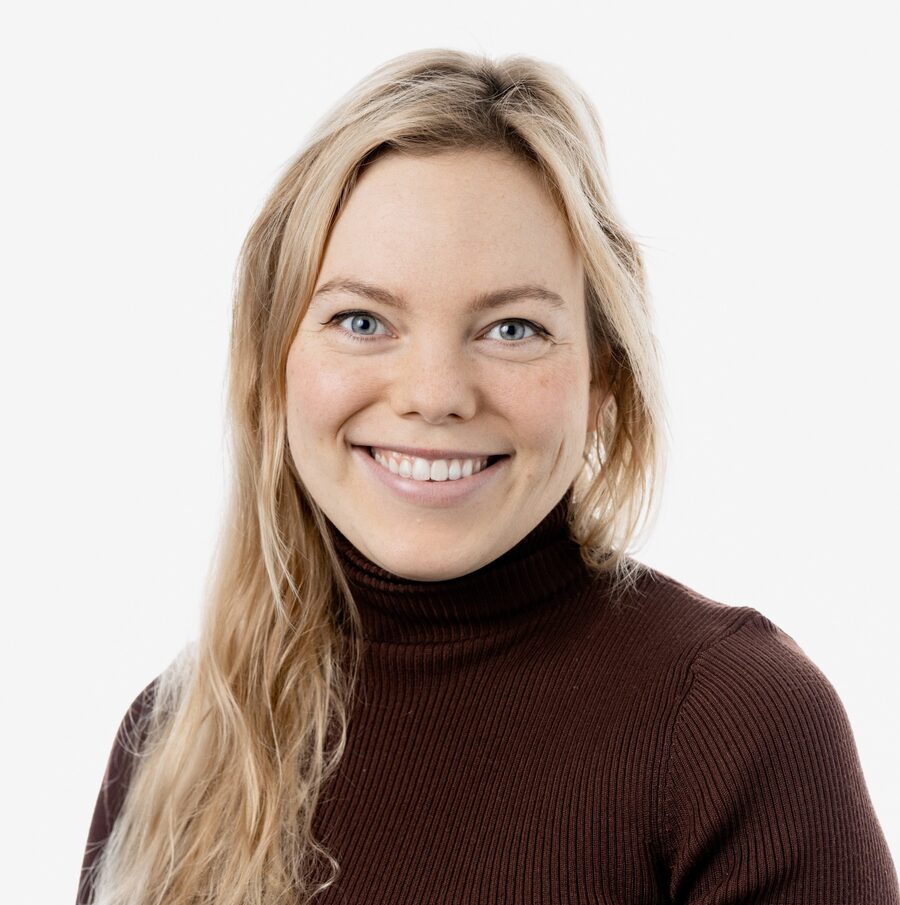
Jane Hillston

Jane Hillston

Keynote · The University of Edinburgh, Edinburgh

Jane is an internationally leading researcher in computer science, focusing on modelling and analysis techniques to understand and predict the behaviour of dynamic systems.

Her PhD thesis introduced stochastic process algebra and was awarded the Distinguished Dissertation Award by the British Computer Society (BCS) and the Committee of Professors and Heads of Computing. Subsequently, she has developed a number of high-level modelling languages for application domains. These range from performance modelling of computing systems, understanding of biological processing and quantified verification of collective adaptive systems, with increasing integration of data-driven techniques over the last decade.

Jane has extensive experience in academic leadership, having served as Head of the School of Informatics and Deputy Vice-Principal Research at the University of Edinburgh. She was Chair of the UK Computing Research Committee between 2018 and 2021 and currently sits on the Board of the Edinburgh Parallel Computing Centre and the DataLab.

She has strong interests in interdisciplinary research, research culture and equality, diversity and inclusion. She is currently Dean of Research and Research Excellence Framework in the College of Science and Engineering at the University of Edinburgh.

Jane is a Fellow of the Royal Society, the Royal Society of Edinburgh and the British Computer Society. She was awarded the Needham Award in 2005, the RSE Lord Kelvin Medal for Physical, Engineering and Informatics Sciences in 2021 and the BCS Lovelace Medal for Computer Science Research in 2023. She was awarded an MBE in the King’s Birthday Honours List in June 2023.
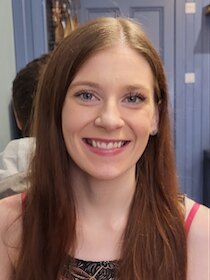
Cicely K. Macnamara

Cicely K. Macnamara

Keynote · University of St Andrews, St Andrews

Cicely joined the School of Medicine in January 2025 as a Lecturer in Medical Statistics. Previously, she held a Rankin-Sneddon Fellowship in Mathematical Biology at the University of Glasgow and, before that, an EPSRC postdoctoral research position at the University of St Andrews in the School of Mathematics and Statistics.

Her interests are in modelling cancer, with a specific interest in agent-based modelling of the tumour microenvironment. She leads a research initiative developing PhysiMeSS as an add-on to PhysiCell, allowing fine-grained modelling of the extracellular matrix to determine its effect on cancer development and progression.

Lyndsay Kerr

Lyndsay Kerr

Invited talk · University of Strathclyde, Glasgow

Lyndsay began her journey at Strathclyde as a student in 2012 and graduated with a First-Class Honours degree in Mathematics in 2016. Following this, she obtained a scholarship from the Carnegie Trust to complete a PhD at Strathclyde under the supervision of Dr Matthias Langer and Dr Wilson Lamb. Her PhD focused on the study of discrete coagulation–fragmentation equations, which describe systems consisting of clusters of particles that can merge together and break apart.

She then spent four years working at the Institute of Genetics and Cancer (University of Edinburgh) with Dr Duncan Sproul and Professor Ramon Grima as a Cross-Disciplinary Postdoctoral Fellow. During this time she moved into the field of biomedicine and conducted interdisciplinary biomedical research using mathematical modelling and bioinformatics.

Following this she returned to the Department of Mathematics and Statistics at Strathclyde as a Chancellor’s Fellow. Her current interests involve the use of mathematical models and bioinformatics to further understand biological systems. In particular, certain parts of DNA can be marked by chemical modifications. These marks play very important roles in normal cellular function, and changes in these marks are associated with diseases such as cancer. She is interested in investigating the patterning of these marks within DNA: how they arise, how they are maintained, how they vary throughout the genome and how they can be changed. Answering these questions could aid in the understanding of the biological processes that underlie disease and could lead to potential therapeutic targets. Her research combines the processing and analysis of terabytes of raw DNA sequencing data with the development and analysis of appropriate mathematical models describing DNA systems.

She has a passion for teaching and enjoys teaching various mathematical and statistical classes at Strathclyde, as well as a Master’s-level Mathematical Biology course at the African Institute for Mathematical Sciences in South Africa.

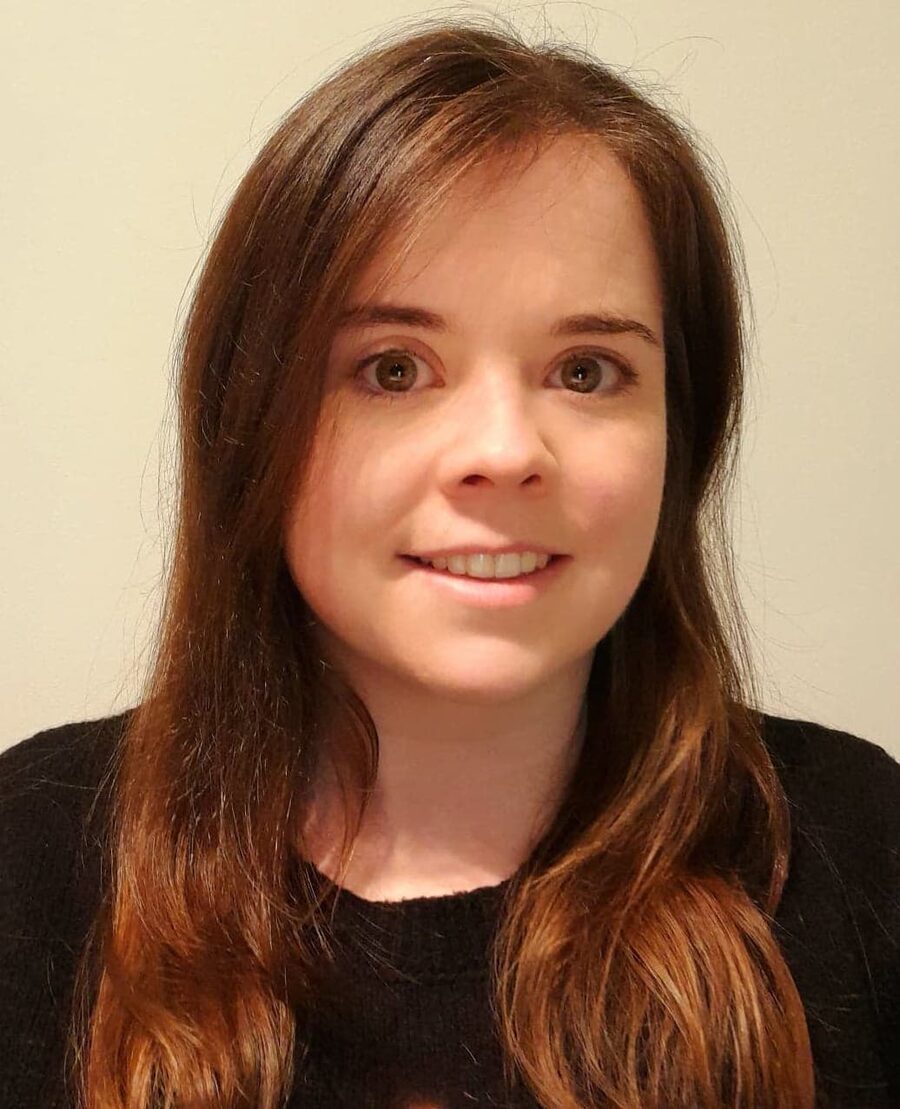
Naomi van den Berg

Naomi van den Berg

Invited talk · CRUK Scotland Institute, Glasgow

Naomi is Dutch and the Mathematical Modeller for MANIFEST, which she joined in March 2025, co-supervised by Xiao Fu and Samra Turajlic. Before joining this role, she finished her PhD at the University of Cambridge, which focused on mathematically capturing emergent interaction dynamics of the gut microbiome, so cancer is relatively new to her.

During her studies, she was co-president of Cambridge University Students Against Pseudoscience, a student group dedicated to understanding and tackling the growing crisis of mis- and disinformation. She was also social secretary for her college (Darwin), organising formal dinner swaps with other colleges and recovering inter-collegiate connections after COVID.

She is passionate about politics, the environment and public health, and advocates for flight-free conference attendance where possible. In her free time she likes to dance, draw, socialise, write, hike with her partner, do amateur microscopy and engage in local political movements.

Fiona Macfarlane

Fiona Macfarlane

Invited talk · Certara, St Andrews

Fiona is a Quantitative Systems Pharmacology (QSP) scientist at Certara. She was previously a postdoctoral Research Fellow within the Mathematical Biology research group, School of Mathematics and Statistics, at the University of St Andrews.

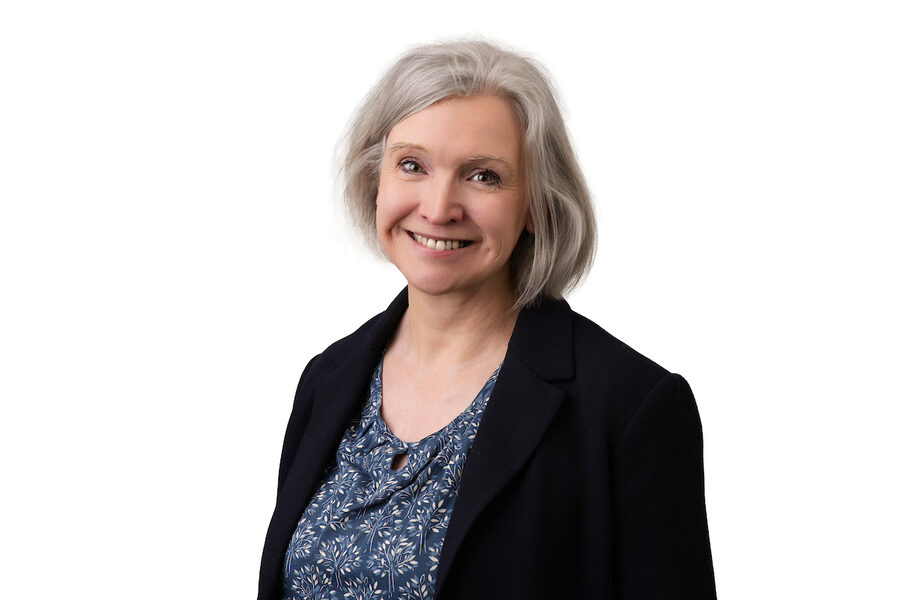
Luciana Luque
Chair

Luciana Luque

Chair of the day · CRUK Scotland Institute, Glasgow

Dr Luciana Melina Luque is a cross-disciplinary scientist working at the interface of physics, mathematics, computation, biology, and immuno-oncology. She is currently an independent Cross-Disciplinary Fellow in Cancer Research at the Cancer Research UK Scotland Institute in Glasgow, where she combines computational and experimental approaches to study cancer–immune interactions, with a particular focus on CAR T-cell immunotherapy.

Luciana began her academic career in physics, completing her undergraduate degree at the National University of Catamarca, Argentina, before undertaking a Master’s degree in Theoretical Physics at Aix-Marseille University, France, where she worked on topics related to Loop Quantum Gravity. She later completed a PhD in statistical physics and critical phenomena at the National University of La Plata and the Institute of Physics of Liquids and Biological Systems, developing numerical and Monte Carlo approaches to study complex systems. She subsequently expanded her experience in computational biology through postdoctoral work and research internships at the Institute of Physical Chemistry Blas Cabrera in Madrid, the University of Edinburgh, Harvard Medical School, and King’s College London. Her transition into cancer research brought these quantitative tools into immuno-oncology, where she developed agent-based models to investigate CAR T-cell dynamics and therapeutic strategies.

Her expertise spans several pillars of computational biomedicine, including mathematical and computational modelling, agent-based modelling, multiplexed image analysis, bioinformatics, machine learning, and artificial intelligence. She has worked with high-dimensional spatial technologies such as Imaging Mass Cytometry, CODEX, and IHC, as well as RNA-seq, allowing her to study cancer across biological scales — from tissue architecture and cellular neighbourhoods to intracellular regulation. Her current work is increasingly wet-lab integrated, allowing her to generate, analyse, and interpret biological data in close collaboration with experimentalists, clinicians, and translational partners.

Luciana is particularly interested in building mechanistic, data-informed models that can help bridge the gap between laboratory research and clinical impact. Her collaborative experience spans academia, clinical research, and the private sector, reflecting her commitment to developing computational tools that are biologically grounded, clinically relevant, and ultimately useful for patients. Alongside her scientific work, she is an advocate for women and underrepresented groups in STEM, using her own path from theoretical physics to cancer research to promote visibility, inclusion, and supportive scientific communities.

Register now

Free admission. Travel grants and caring-responsibility funding can be requested on the registration form. Places are limited.

Register now →
Register now